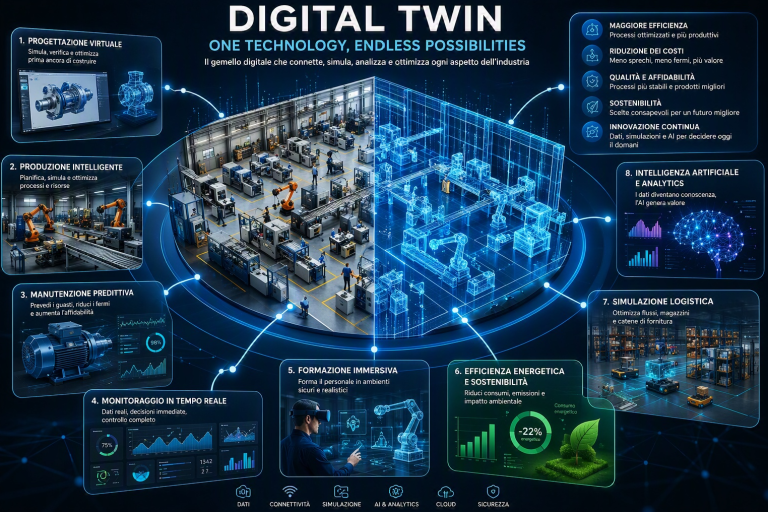
El Pacto Verde Europeo Establece una ambiciosa hoja de ruta para transformar la Unión Europea en una economía climáticamente neutra para 2050. Lograr esta visión requiere no solo cambios en las políticas, sino también la adopción de tecnologías avanzadas que optimicen los recursos, reduzcan las emisiones y permitan una toma de decisiones más inteligente. Entre estas tecnologías, Gemelos digitales Se están consolidando como un poderoso catalizador para acelerar la transición ecológica en todos los sectores.
Un enfoque de sostenibilidad basado en datos
Los gemelos digitales —réplicas virtuales de activos, sistemas o procesos físicos— permiten la monitorización y simulación continuas mediante datos en tiempo real. Esta capacidad permite a las organizaciones comprender mejor el comportamiento de los sistemas en diferentes condiciones e identificar ineficiencias que, de otro modo, permanecerían ocultas.
En el contexto de la sostenibilidad, esto significa:
- Reducción del consumo de energía mediante la simulación y optimización de las operaciones antes de su implementación.
- Minimizar los residuos mediante una planificación precisa de los recursos y un control de procesos
- Prolongación del ciclo de vida de los activos mediante mantenimiento predictivo y monitorización del rendimiento
Al pasar de enfoques reactivos a predictivos e incluso prescriptivos, los gemelos digitales ayudan a las industrias a avanzar hacia operaciones más sostenibles y eficientes.
Optimización de los sistemas e infraestructuras energéticas
Una de las aplicaciones más impactantes de los gemelos digitales se encuentra en gestión energética e infraestructura. Las redes inteligentes, los sistemas de energía renovable y la infraestructura urbana pueden beneficiarse de la integración de gemelos digitales.
Por ejemplo, los gemelos digitales pueden:
- Simular escenarios de demanda y suministro de energía para mejorar la estabilidad de la red.
- Optimizar la integración de fuentes de energía renovables como la eólica y la solar.
- Reduzca las pérdidas de transmisión mediante una mejor planificación y monitorización.
- Apoyar el desarrollo de edificios energéticamente eficientes y ciudades inteligentes.
Al permitir ajustes en tiempo real y una planificación a largo plazo, los gemelos digitales desempeñan un papel crucial en la reducción de las emisiones de carbono y la mejora de la eficiencia energética, pilares clave del Pacto Verde.
Fomento de prácticas de economía circular
La transición de un sistema lineal a uno economía circular Este es otro objetivo fundamental del Pacto Verde Europeo. Los gemelos digitales contribuyen significativamente a este cambio al proporcionar información detallada sobre los ciclos de vida de los productos y los flujos de materiales.
Con los gemelos digitales, las empresas pueden:
- Realizar un seguimiento de los materiales desde su producción hasta el final de su vida útil.
- Simular escenarios de reutilización, remanufactura y reciclaje.
- Diseñar productos teniendo en cuenta la sostenibilidad desde el principio.
Este nivel de transparencia fomenta patrones de producción y consumo más responsables, lo que ayuda a las industrias a reducir su impacto ambiental.
Apoyando la fabricación sostenible
En el sector manufacturero, los gemelos digitales están transformando el diseño y la operación de los sistemas de producción. Al simular líneas de producción completas, las empresas pueden identificar procesos que consumen mucha energía, optimizar los flujos de trabajo y reducir las emisiones antes de implementar cambios físicos.
Además, los gemelos digitales permiten:
- puesta en marcha virtual, reduciendo la necesidad de pruebas físicas y viajes.
- Monitorización y mantenimiento remotos, reduciendo los costos operativos y el impacto ambiental.
- ciclos de mejora continua, impulsado por datos de rendimiento en tiempo real
Estas capacidades se alinean directamente con el objetivo del Pacto Verde de promover procesos industriales más limpios y eficientes en el uso de recursos.
Desafíos y el camino a seguir
A pesar de su potencial, la adopción generalizada de gemelos digitales se enfrenta a varios desafíos. Entre ellos se incluyen una infraestructura de datos sólida, la interoperabilidad entre sistemas y la seguridad y privacidad de los datos. Además, las organizaciones deben desarrollar las competencias digitales necesarias para aprovechar al máximo estas tecnologías.
Sin embargo, a medida que la transformación digital continúa acelerándose en toda Europa, estas barreras se están superando gradualmente. Las inversiones en infraestructura digital, estandarización y formación están allanando el camino para una implementación más amplia.
Conectando la innovación con el desarrollo de habilidades.
Para aprovechar al máximo el potencial de los gemelos digitales en apoyo del Pacto Verde Europeo, es esencial dotar a la fuerza laboral de las competencias adecuadas. Aquí es donde entran en juego iniciativas como la Gemelo digital en la fabricación inteligente El proyecto desempeña un papel crucial.
Mediante el desarrollo de programas de formación integrales y oportunidades de aprendizaje práctico, el proyecto prepara a estudiantes y profesionales para diseñar, implementar y gestionar sistemas de gemelos digitales en entornos industriales reales. Gracias a su enfoque en la sostenibilidad, la innovación y el aprendizaje aplicado, desarrolla directamente las competencias necesarias para una economía europea más verde y resiliente.
A medida que Europa avanza hacia sus objetivos climáticos, los gemelos digitales no son solo un avance tecnológico, sino que se están convirtiendo en un factor clave para la transformación sostenible.