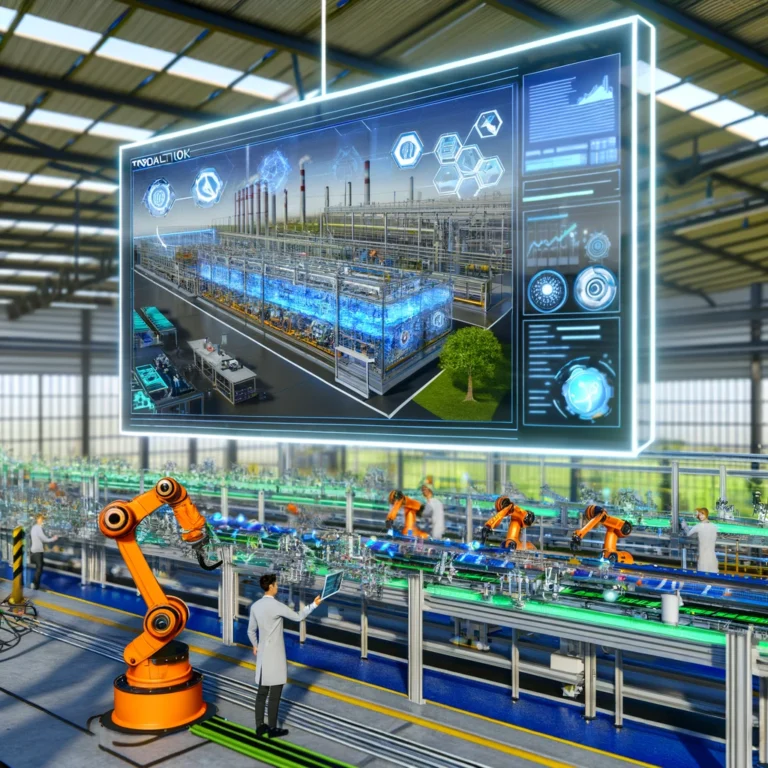
Digital Twin and Virtual Commissioning are key technologies for machine manufacturing companies, offering numerous benefits that enhance efficiency, quality, and process management. Here is an overview of how these technologies can be utilized:
Digital Twin
Digital Twin is a digital replica of a physical object, allowing real-time monitoring, simulation, and optimization of operations. For machine manufacturing companies, Digital Twin offers the following advantages:
- Process Optimization: It allows simulation of different configurations and operational scenarios, identifying and resolving potential issues before they occur.
- Predictive Maintenance: By constantly monitoring the performance of physical assets, companies can implement predictive maintenance strategies, reducing downtime and optimizing resource utilization.
- Quality Improvement: By integrating real-time data, companies can identify anomalies in the process that could affect the final product quality.
Virtual Commissioning
Virtual Commissioning involves creating a simulation model of a production plant to test modifications and updates before implementing them in the real plant. The benefits include:
- Reduced Development Time: Software debugging can be performed before physical assembly, reducing development time.
- Early Diagnosis: It allows early detection of malfunctions that could compromise machine performance, improving safety and efficiency.
- Resource Optimization: It enables virtual testing of a solution before actual implementation, reducing costs and improving productivity.
Integration of Digital Twin and Virtual Commissioning
The integration of Digital Twin and Virtual Commissioning offers a comprehensive approach to machine design and manufacturing. By using Digital Twin to monitor and optimize operations and Virtual Commissioning to test and validate changes, companies can:
- Improve Quality and Reliability: Test and optimize production processes in a virtual environment before implementing changes in the real plant.
- Reduce Operational Costs: Implement predictive maintenance strategies and test changes in a virtual environment to reduce maintenance and operational costs.
- Increase Efficiency: Optimize resource utilization and improve overall equipment productivity.
Conclusion
Digital Twin and Virtual Commissioning are powerful tools for machine manufacturing companies, offering significant benefits in terms of efficiency, quality, and process management. Integrating these technologies can transform the way companies design, produce, and manage their products, ensuring a competitive advantage in the modern market.