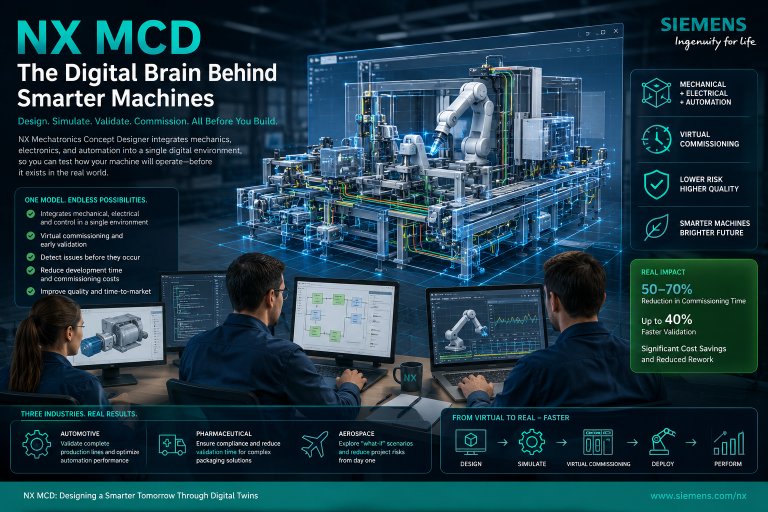
A technology that replicates territories, agricultural holdings, ecosystems, and production processes in virtual environments is profoundly beginning to transform the rural world. What started as an industrial tool to optimize factories and supply chains is now emerging as a driver of rural innovation, capable of improving sustainability, competitiveness, and quality of life in villages and agricultural regions.
Digital twins make it possible to create virtual representations of croplands, livestock farms, irrigation networks, forests, or even entire municipalities, powered by real-time data from sensors, satellites, and geographic information systems. Thanks to them, farmers, cooperatives, and public administrations can simulate future scenarios, anticipate risks, and make better-informed decisions in a context shaped by climate change and resource scarcity.
From the laboratory to the land: digital twins in action
In rural settings, digital twins have moved beyond the experimental stage to become practical tools used by technology companies, agri-food corporations, and specialized startups. Established companies and new players alike are showing that this technology can be successfully transferred from industrial environments to the territory.
John Deere, for example, has developed full digital twins of agricultural operations by integrating connected machinery, soil sensors, and satellite data. These models allow different planting, irrigation, and fertilization scenarios to be simulated, helping farmers maximize yields and reduce operating expenses before intervening in the real field.
Bayer Crop Science, through its digital platform FieldView, uses advanced models that function as digital twins of agricultural plots. Based on climatic, historical, and real-time data, the company provides customized recommendations for each crop, making it possible to anticipate diseases, optimize the use of crop protection products, and improve the sustainability of farms.
In the water sector, SUEZ and Veolia are applying digital twins to irrigation networks and water management in rural areas. These virtual replicas make it possible to detect leaks, predict future demand, and optimize water distribution in regions facing water stress—a critical factor for agriculture and rural supply.
Forest management is also benefiting from this technology. IBM, through its Environmental Intelligence Suite platform, combines digital twins, artificial intelligence, and climate data to help governments and companies anticipate wildfires, assess environmental risks, and plan preventive interventions in vulnerable rural areas.
Specialized startups are also playing a key role. Companies such as xFarm, Climate FieldView, and Agroptima are developing farm-scale digital twins for small and medium-sized producers, democratizing access to digital simulation and bringing these tools closer to cooperatives and family farmers.
In livestock farming, companies like Allflex Livestock Intelligence create digital twins of herds through sensors placed on animals, enabling real-time monitoring of health, reproduction, and feeding. These solutions are especially valuable in extensive systems, where individual control is complex and costly.
Taken together, these examples show that digital twins are already operating in the field, generating economic and environmental value and demonstrating that rural digitalization is both viable and scalable.
Rural digitalization: threat or opportunity?
The introduction of digital twins in rural areas raises questions similar to those already seen in industry: automation, changes in employment, and the transformation of traditional professional profiles. Many routine tasks, such as manual crop monitoring or reactive maintenance of rural infrastructure, can be automated through sensors, artificial intelligence, and predictive models.
However, far from posing a direct threat, this automation opens up new opportunities. In rural areas facing labour shortages and population ageing, digitalization can ease workloads, reduce physical risks, and make the sector more attractive to younger generations.
At the same time, new roles are emerging related to data management, interpretation of digital models, and supervision of intelligent systems, shifting the focus from physically intensive work toward more technical and strategic tasks.
Tomorrow’s rural skills
The adoption of digital twins in rural environments is redefining the skills needed to work in the primary sector and in land management. Among the most in-demand skills are:
- Data analysis applied to agriculture and the environment
- Digital modelling and territorial simulation
- Operation of sensors, drones, and IoT technologies
- Sustainable management of natural resources through intelligent systems
- Adaptability, critical thinking, and complex problem-solving
Technical skills will be essential, but soft skills—such as the ability to make informed decisions, collaborate, and adapt to changing environments—will continue to be fundamental in a digitalized rural setting.
New job opportunities in rural areas
The growing use of digital twins is giving rise to professional profiles that barely existed in rural areas just a few years ago:
- Agricultural digital twin specialist
- Agro-environmental data analyst
- Smart irrigation systems manager
- Predictive maintenance technician for rural infrastructure
- Digital territorial planner
These new jobs can help stabilize populations in rural areas, attract young talent, and diversify rural economies beyond traditional models.
A challenge for education and public policy
The advance of digital twins in rural areas poses an urgent challenge for education systems and public policy. Traditional agricultural and forestry training must evolve to incorporate digital skills, simulation, and data analysis, preparing professionals for an increasingly technological environment.
Moreover, the digital divide remains one of the main obstacles. Without connectivity, technological infrastructure, and access to training, many rural areas risk being left out of this transformation. Public policies must therefore ensure inclusive digitalization by supporting training programs, investment in connectivity, and technology transfer.
Collaboration among public administrations, research centres, technology companies, and rural communities will be essential to ensure that digital twins are not just a one-off innovation, but a real lever for territorial development.
Conclusion
Digital twins are no longer a distant promise for rural areas. They are becoming a strategic tool for producing more sustainably, managing land more effectively, and redefining rural work.
The real question is not whether this technology will reach the countryside, but how it will be integrated and who will benefit from it. If accompanied by training, investment, and inclusive policies, digital twins can become a decisive ally in building a more resilient, innovative, and future-ready rural world.
References:
- John Deere (digital twins of agricultural operations and connected machinery)
- Bayer Crop Science / FieldView (agricultural plots as digital twins)
- SUEZ and Veolia (water management and rural irrigation networks)
- IBM (environmental digital twins and wildfire prevention)
- Agritech startups such as xFarm, Agroptima, and Climate FieldView
- Allflex Livestock Intelligence (smart livestock farming and digitized herds)