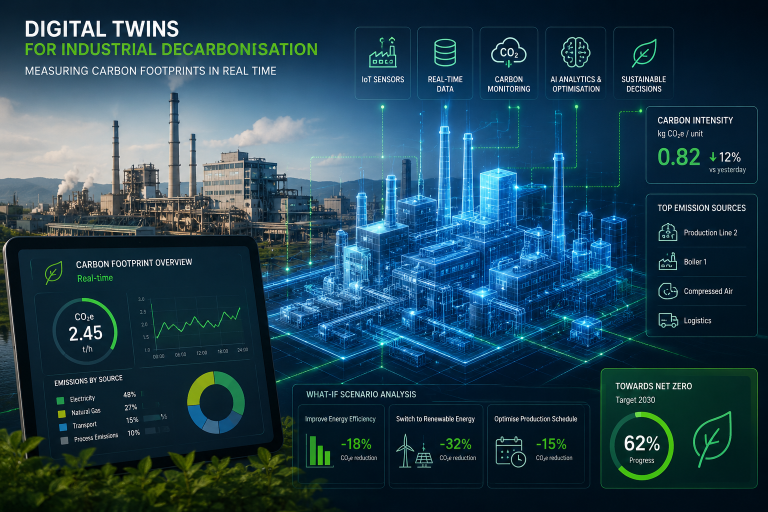
The concept of Digital Twin has revolutionized the way industries monitor, analyse, and optimize their processes. Digital twins have also become valuable tools in the design and implementation of software, whether related to production plants, logistics, or other industrial sectors.
However, to ensure high reliability and effectiveness of these systems, it is essential to evaluate the quality of the software used for their implementation. In this context, the ISO/IEC 25010 standard provides a solid framework for analysing the software quality of Digital Twins.
ISO/IEC 25010: Software Quality Standard
The ISO/IEC 25010:2011 standard defines a software quality model based on eight main characteristics:
- Functional Suitability: Measures the software’s ability to meet specified functional requirements.
- Reliability: Evaluates the continuity and stability of the software over time and under different operating conditions.
- Usability: Concerns the ease of use and the user experience when interacting with the system.
- Performance Efficiency: Analyses resource usage and software response times under various conditions.
- Maintainability: Measures how easily the software can be modified to fix errors or enhance functionalities.
- Security: Focuses on protecting software from unauthorized access and cybersecurity threats.
- Compatibility: Verifies the software’s ability to operate in an environment alongside other systems without conflicts.
- Portability: Measures how easily the software can be transferred and used on different platforms.
To meet these criteria, the adoption of simulation technologies and digital twins is emerging as an innovative and effective practice.
Simulation and Digital Twin in Software Testing
Simulation technologies allow the replication of real operating environments in which the software will run, enabling development teams to detect and fix bugs before the release phase. A digital twin, on the other hand, represents a digital replica of a software system that interacts in real time with its physical or virtual counterpart. This technology enables software performance monitoring, prediction of potential malfunctions, and improved maintainability.
Benefits of Using Simulation Technologies in Applying ISO 25010
The integration of simulation and digital twin technologies into the software development lifecycle is a valuable aid in ensuring compliance with key principles of the ISO 25010 standard, particularly:
- Functional Suitability: The ability to simulate real-world conditions allows developers to create a product that best suit specific requirements, adding or removing functionalities based on test results.
- Reliability and Performance: Testing in simulated environments enables the evaluation of software behaviour under various operating conditions, ensuring robustness and resilience.
- Usability: Simulating use-case scenarios helps refine user experience and identify potential interaction issues. Additionally, integrating augmented reality technologies provides users a fully immersive experience, further enhancing software usability.
- Maintainability: The digital twin facilitates anomaly detection and allows for “offline” simulation of software updates, bug fixes, and patch management.
- Security: Through the digital replica, it is possible to identify vulnerabilities and potential attacks before the software is deployed in production.
- Portability: The simulation environment allows software to be tested across different runtime platforms, verifying its compatibility.
Conclusion
The adoption of simulation and digital twin technologies in the software development process represents a strategic approach to ensuring quality according to the ISO 25010:2011 standard. Using this standard for software quality assessment can support companies in the continuous improvement of their solutions, ensuring they effectively meet market needs and user expectations.
Thanks to the ability to test, monitor, and continuously optimize software in a controlled environment, these technologies enable the creation of more reliable, secure, and high-performing products, improving business process efficiency and overall user satisfaction.