The use of an integrated approach in virtual commissioning undoubtedly represents a significant opportunity for companies operating in the industrial automation sector.
In recent years, the constant improvement of automation platforms and the use of increasingly high-performing software with HMI/SCADA user-friendly interfaces, as well as the exploitation of cloud platforms integrated into “work-oriented social groups,” have greatly improved the time to market for medium and large projects.
On the other hand, following the turmoil caused by the COVID-19 pandemic, the approval times for budgets have lengthened, leading to delays in order issuance by customers and causing significant compression in project execution times.
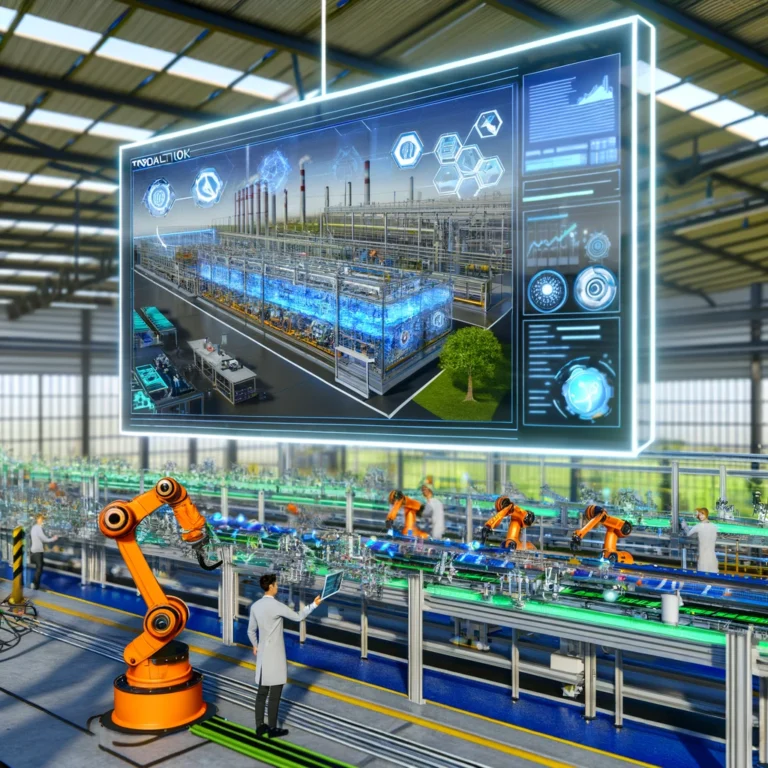
The use of digital twin and virtual commissioning technologies, supported by augmented reality in conjunction with virtual reality, is a useful tool to reduce on-site commissioning times, providing a range of technical and human benefits, perceptible to both the plant builders and the end customers.
Here, I have considered the execution of a simulation limited to the connected utilities and the functionalities of the software’s automatic cycles as the most cost-effective scenario, not considering the further possibility of simulating process variables, as it is more difficult to apply and not always justifiable in terms of cost.
Below, I list a series of indirect benefits derived from the use of these new technologies:
- REDUCED WORKPLACE RISKS
The reduction of on-site activities and subsequent training conducted with virtual tools significantly decreases workplace risks, preserving the safety of personnel.
- COST REDUCTION AND IMPROVED LIVING CONDITIONS FOR TECHNICAL STAFF
The need for personnel to travel on-site for commissioning is one of the most significant inconveniences and costs. Performing early software functionality tests with a digital twin drastically reduces the need for long trips, limiting them to the final test phases for the SAT and subsequent production assistance if necessary.
- REDUCED ENVIRONMENTAL IMPACT
Reduced on-site presence directly decreases consumption; additionally, savings from the reduced use of materials for production tests must be considered.
- BETTER TRAINING FOR DEPARTMENT AND MAINTENANCE STAFF
The use of augmented reality in conjunction with virtual reality, made possible by new devices on the market at acceptable prices, accelerates the training of department and maintenance staff. Training sessions can be replicated when necessary with recorded material made available, thus avoiding all the problems associated with the use of expert personnel on-site. For example, once the sequence for changing a robot’s format (gripper replacement, mechanical adjustments, etc.) is created with expert personnel, it can be reviewed at any time and even “relived” with the aid of VR and AR.
- EXHAUSTIVE FAT = MINIMIZED DISPUTES
Conducting a FAT with a digital twin allows for the verification of all automation functionalities in the presence of the customer months before the completion of on-site activities, minimizing issues during the startup phase and consequently mitigating disputes over field modifications and subsequent production delays.
In conclusion, I believe it is the responsibility of industrial automation companies to educate their customers about the use of this technology, investing without hesitation to improve not only their own financial statements but also the quality of life and safety of their workers.