Technology that replicates processes, decisions, and even human behaviour is expanding beyond industry. Companies and organisations are already experimenting with digital twins that can anticipate actions and optimise tasks. The debate is no longer technological, but social and labour-related.
Digital twins, virtual models powered by real-time data, are no longer a tool exclusive to factories and infrastructure. Today, they are increasingly being applied in areas where the human factor is key, from business management to healthcare and education. Their advancement raises an inevitable question: could they eventually replace people?
From Machines to Human Decisions
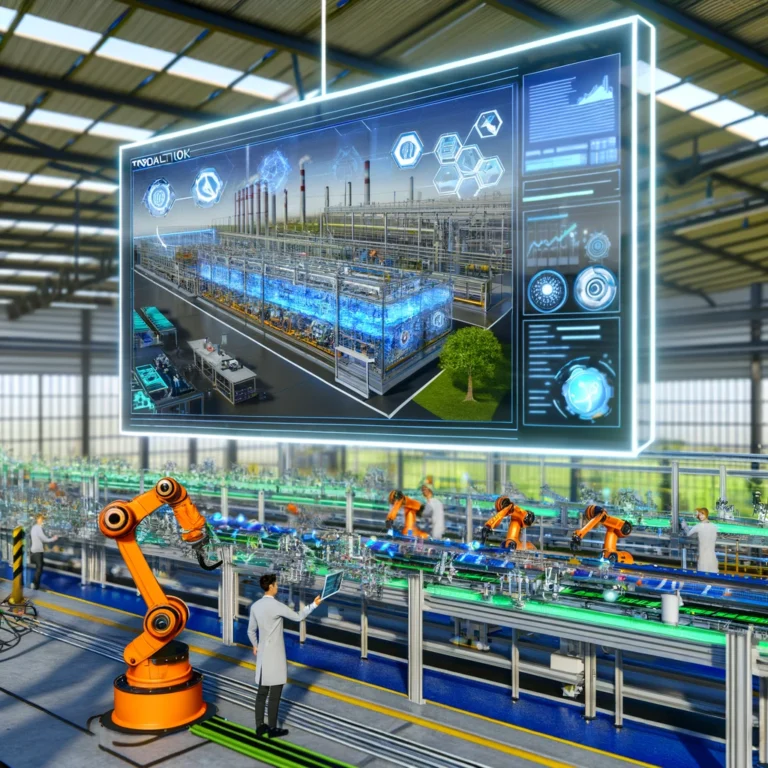
For years, digital twins have been used to simulate the behaviour of machines, supply chains, and energy networks. Their objective was clear: to predict failures, reduce costs, and optimise processes. Now, that logic is being applied to decision-making activities.
Some companies are already developing digital twins of job positions or entire teams, capable of simulating workflows, evaluating workloads, or anticipating outcomes in the face of organisational changes. In healthcare, so-called patient digital twins enable testing treatments before applying them, supporting clinical decision-making.
In education and training, predictive models replicate learning profiles to personalise content and detect difficulties early.
Technological support or gradual replacement?
The prevailing discourse insists that digital twins do not replace people, but rather assist them. However, the experience with other technologies suggests a gradual rather than abrupt replacement.
When a system can analyse information, propose the best decision, and execute it autonomously, human intervention is reduced. In sectors such as logistics, energy, and infrastructure management, some digital twins already operate in real time without constant supervision.
The risk is not the immediate disappearance of jobs, but the silent automation of cognitive functions that previously relied on human expertise.
Impact on Employment and New Profiles
Repetitive, predictable, or rule-based tasks are the most exposed to this transformation. In turn, new roles are emerging related to model monitoring, data analysis, and strategic decision-making.
Working with digital twins will require new skills: interpreting simulations, detecting biases, understanding how artificial intelligence works, and maintaining human control over automated systems.
An Ethical and Regulatory Challenge
Beyond employment, digital twins raise ethical questions. Who is responsible for a decision made by a digital replica? To what extent can a model faithfully represent a person? Who controls the data that feeds it?
Without clear legal frameworks, there is a risk that these technologies will be used to monitor, evaluate, or replace workers without transparency or safeguards.
The Digital Reflection of the Future
Digital twins do not appear destined to completely replace people, but rather to redefine their role. The key will be how they are integrated: as support tools that expand capabilities or as invisible substitutes that reduce human intervention.
The question is no longer whether we will coexist with digital twins, but under what conditions we will do so.